No products in the cart.

All Categories
All Categories
external
variable
grouped
simple
[fibosearch]
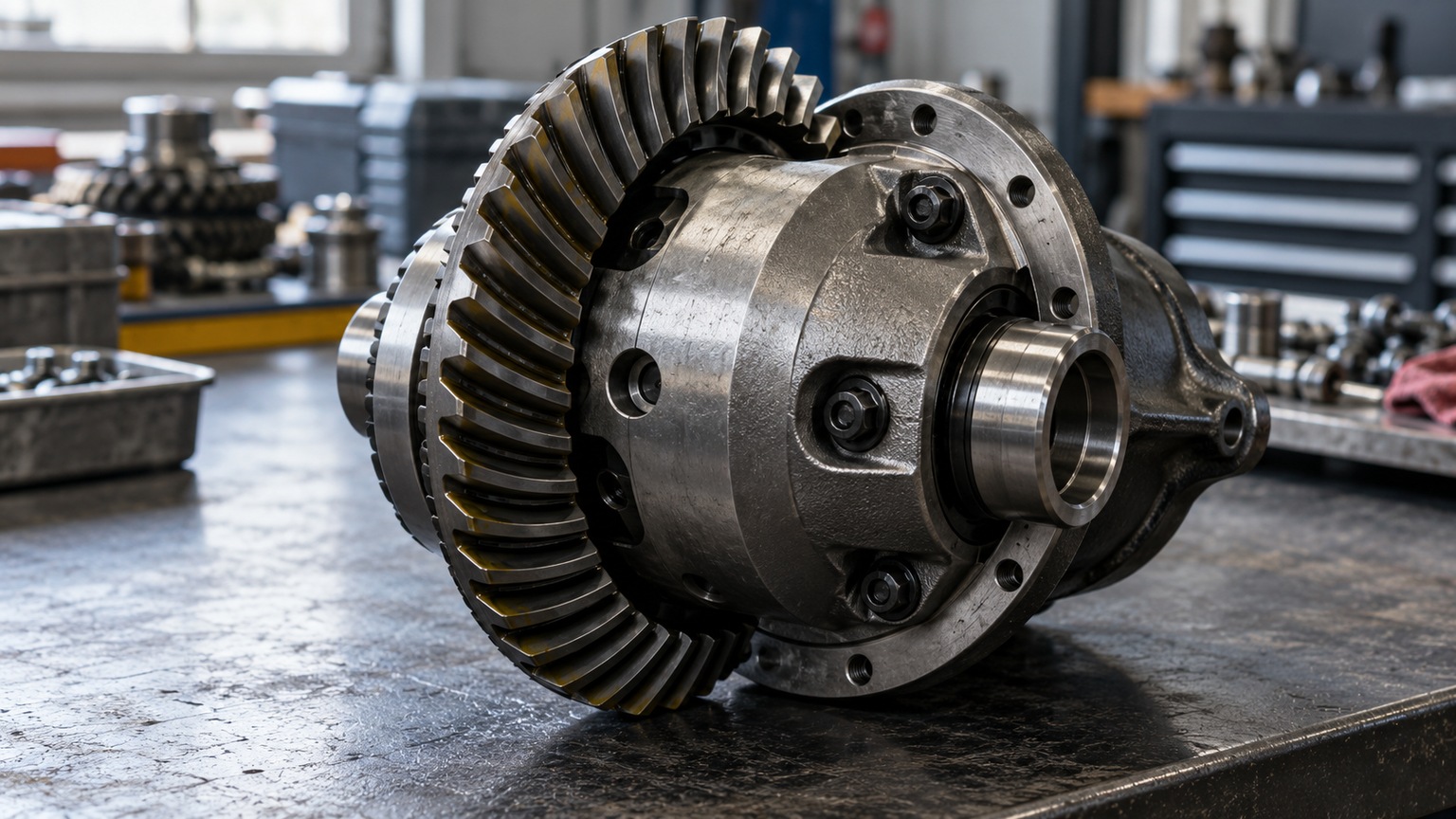
No. A Truetrac is a helical gear limited slip differential, not a locker. It automatically biases torque towards the wheel with more traction. That is different from locking the two sides of an axle together. Eaton also warns that a Truetrac may not transfer power when the spinning wheel is off the ground.
The distinction matters when reading a description of a differential. Automatic torque transfer does not mean automatic axle locking, and limited slip does not promise drive in every traction condition.
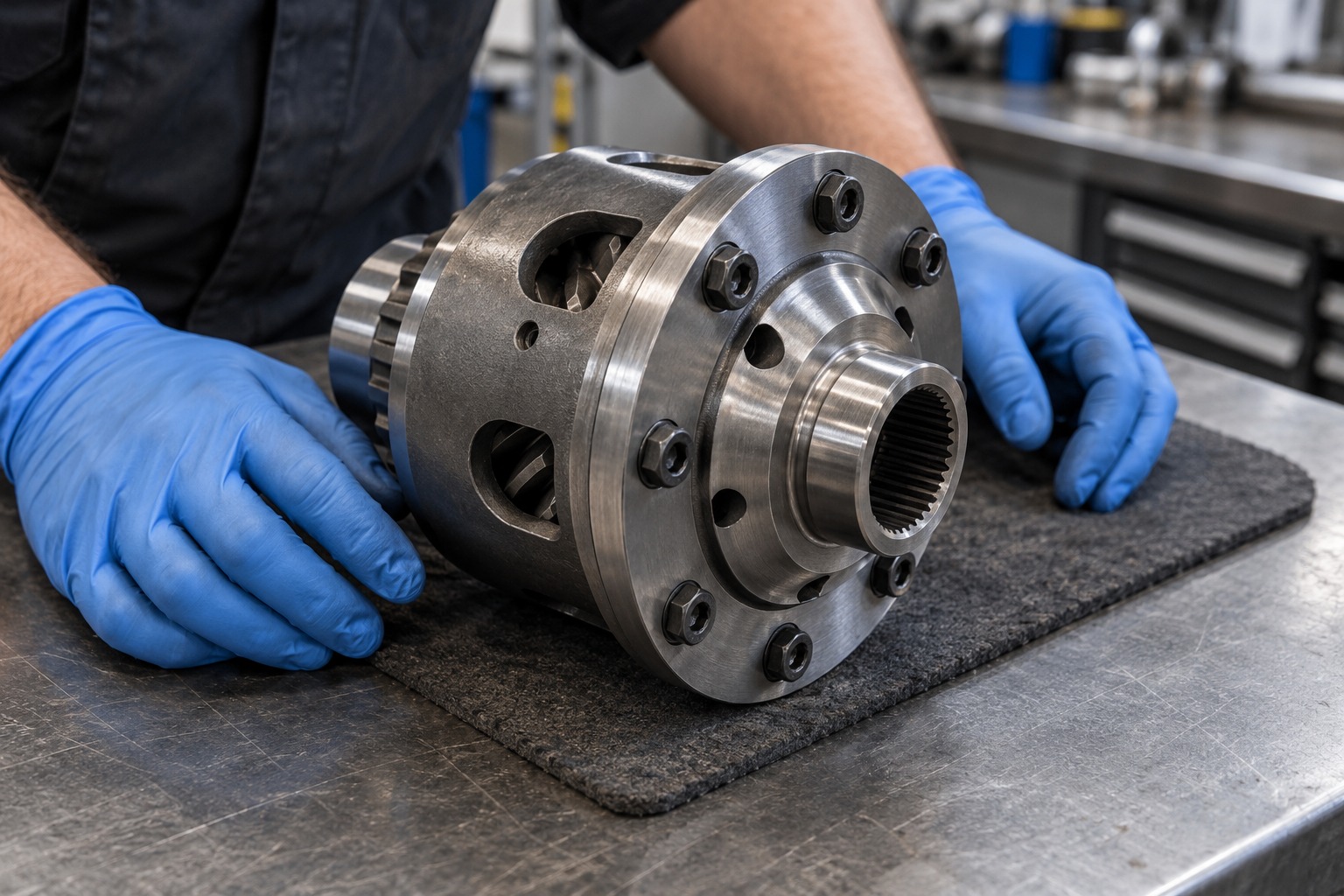
Eaton’s owner’s manual describes parallel axis, planetary helical gears that divide torque automatically. Under normal driving conditions, the Truetrac performs like an open differential. When traction differs, its gear forces can bias drive towards the wheel with more grip.
Harrop describes its Holden ZF Truetrac as a fully geared design. That version uses gears rather than clutch packs or friction materials. Its particular vehicle applications and internal specifications are not a specification for every Truetrac.
Eaton calls the operating principle torque biasing. It is a description of how drive is shared, not a claim that the two wheels are mechanically locked together. Eaton’s FAQ also identifies the Truetrac as a limited slip differential.
The response also varies with direction. Eaton’s manual describes the highest torque bias in forward drive, with a slightly reduced bias in reverse or during engine braking. That does not support a promise of identical behaviour in all three conditions.
A general torque bias figure is not a specification for every unit. Eaton’s manual qualifies its general figure as an upper limit for most designs. An application-specific specification is needed before using a number to judge a particular differential.
Limited slip covers more than one mechanism. The Eaton Posi is a clutch-type example; the Truetrac uses helical gears. The Detroit Locker is a separate automatic locking design. Eaton’s manual distinguishes the three:
| Differential | Mechanism described by Eaton | Important distinction |
|---|---|---|
| Detroit Truetrac | Helical gears bias torque | It is a limited slip differential, not a locker. |
| Eaton Posi | Springs and clutch packs provide resistance; applied torque increases that resistance | It is a clutch-type limited slip design, not the Truetrac mechanism. |
| Detroit Locker | A positive locking mechanism keeps both wheels driven | It can automatically unlock to allow different wheel speeds in turns. |
An automatic locker need not stay locked permanently. These distinctions apply to the named products. Other limited slip and locking designs need their own specifications.
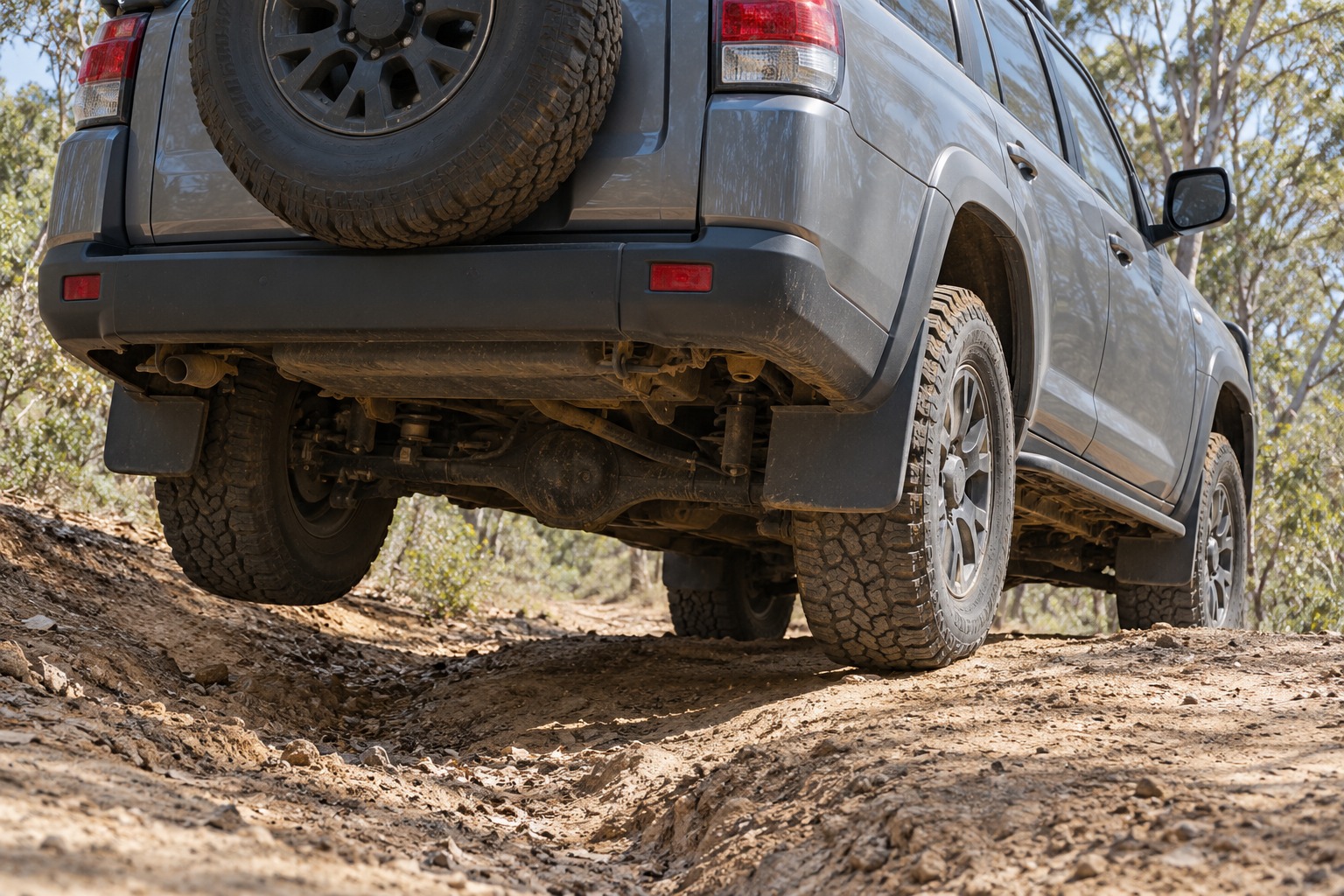
Eaton’s manual says the Truetrac needs some resistance on the ground to begin transferring power. Its warning is conditional: the unit may not transfer power if the spinning wheel is off the ground.
That is a limit on the expected power transfer. It is not a statement that every component stops moving, or that every Truetrac will behave identically. Nor does the warning guarantee that the wheel with grip will receive useful drive in that situation.
Preload is another reason to avoid treating every unit as identical. Eaton describes models built with preload and greater resistance to turning. The amount of restricted rotation depends on the model. That does not turn the Truetrac into a locker or remove the manufacturer’s lifted-wheel warning.
The Detroit Locker has a different stated capability: Eaton describes locking action even with one wheel off the ground. That distinction explains the product categories. It is not a recommendation for a particular vehicle, surface or recovery manoeuvre.
Knowing how a Truetrac works does not identify the differential in a particular car. The separate guide to telling an M78 diff from an M80 or M86 covers identification. A mechanism name alone cannot confirm the correct replacement or the work a vehicle needs.
Eaton’s manual directs installers to confirm the application and use the relevant vehicle or axle service information. It says installation and proper setup belong with a qualified technician.
No clutch packs does not mean no lubrication requirements. Follow the applicable manufacturer instructions for the actual unit and axle. Wear and repair needs are a separate question; the post on whether a 4×4 needs a differential rebuild before a summer trip discusses that subject. It does not establish that a particular Truetrac can be rebuilt.
For a differential component enquiry, discuss the actual vehicle and assembly through the driveline parts range with GJ Drivelines. Its published parts range includes differential components; that does not establish availability, fitment or installation of this brand.


Chrysler – Dodge
727 – 30 Spline 1 11/16″ Seal Diameter
904 – 26 Spline 1 9/16″ Seal Diameter
Ford
C6-T56 – 31 Spline 1 11/16″ Seal Diameter
AOD & C4 & T5 – 28 Spline 1 1/2″ Seal Diameter
4 R 7OW – 28 Spline 1.598″ Seal Diameter
General Motors
T-350 700R4-4LLOE – 27 Spline 1 1/2″ Seal Diameter
T-400-4L80E – 32 Spline 1 7/8″ Seal Diameter
Note: Transmission slip yokes are manufactured with various U-Joint Series. It is important to match Horsepower and Torque requirements to U-Joint Series. For aftermarket transmission applications usually a spline count and seal diameter will identify slip yoke required.

If Pinion Yoke has Placement tabs that retain the U-Joint, measure inside tabs. See Diagram D.

If Pinion Yoke does not have Placement Tabs that retain U-Joint, measure from flat of yoke inside to inside. See Diagram E.

If 4 bolt Flange is used on pinion, measure Pilot Diameter and center to center diagonally bolt hole to bolt hole. See Diagram L.

Universal Joint Size. There are hundreds of U-Joint sizes or “Series” to accomodate many different applications of power and desired longevity for your automotive, 4×4 truck or auto racing requirements, these 4 series of joints cover most needs.
1310 Spicer Series: 1 1/16″ Cup Diameter (Dim C – Diagram A) 3 7/32″ length (Dim B – Diagram A) Certain Ford applications have 2 cups 1 1/8 Diameter. Appropriate horse power range is up to 500 in circle track or road racing, small tire drag racing and 4×4. Also available: Performance Dynamic Cryo Joint.
1330 Spicer Series: 1 1/16″ Cup Diameter (Dim C – Diagram A) 3 5/8″ length (Dim B – Diagram A) Certain Ford applications have 2 cups 1 1/8 Diameter. Slightly stronger than 1310, Used in 5.0 Mustangs. Also available: Performance Dynamic Cryo Joint.
3R Saginaw Series: 1 1/8″ Cup Diameter (Dim C – Diagram A) Retained with internal clip 2 5/8″ (Dim B – Diagram A). Most common GM joint. Horse power range up to 700 in road racing and circle track. Solid drag racing U-Joint can accomodate most sportsman classes. Also available: Performance Dynamic Cryo Joint.
1350 Spicer Series: Manufactured with OEM tolerances and treated with our Cryogenic Process to yeild the strongest U-Joint available. For drag racing applications a solid non-lube design U-Joint is recommended because of the tremendous initial shock load, or short duration of high torque the joint must be able to withstand.

If PST is supplying you with transmission slip yoke, Pinion yoke and driveshaft yoke measure Dim W. See Diagram N.
If PST is supplying you with transmission slip yoke and driveshaft measure Dim X. See Diagram N.
2 Piece driveshafts use Dim Y + Z. See Diagram N.