No products in the cart.

All Categories
All Categories
external
variable
grouped
simple
[fibosearch]
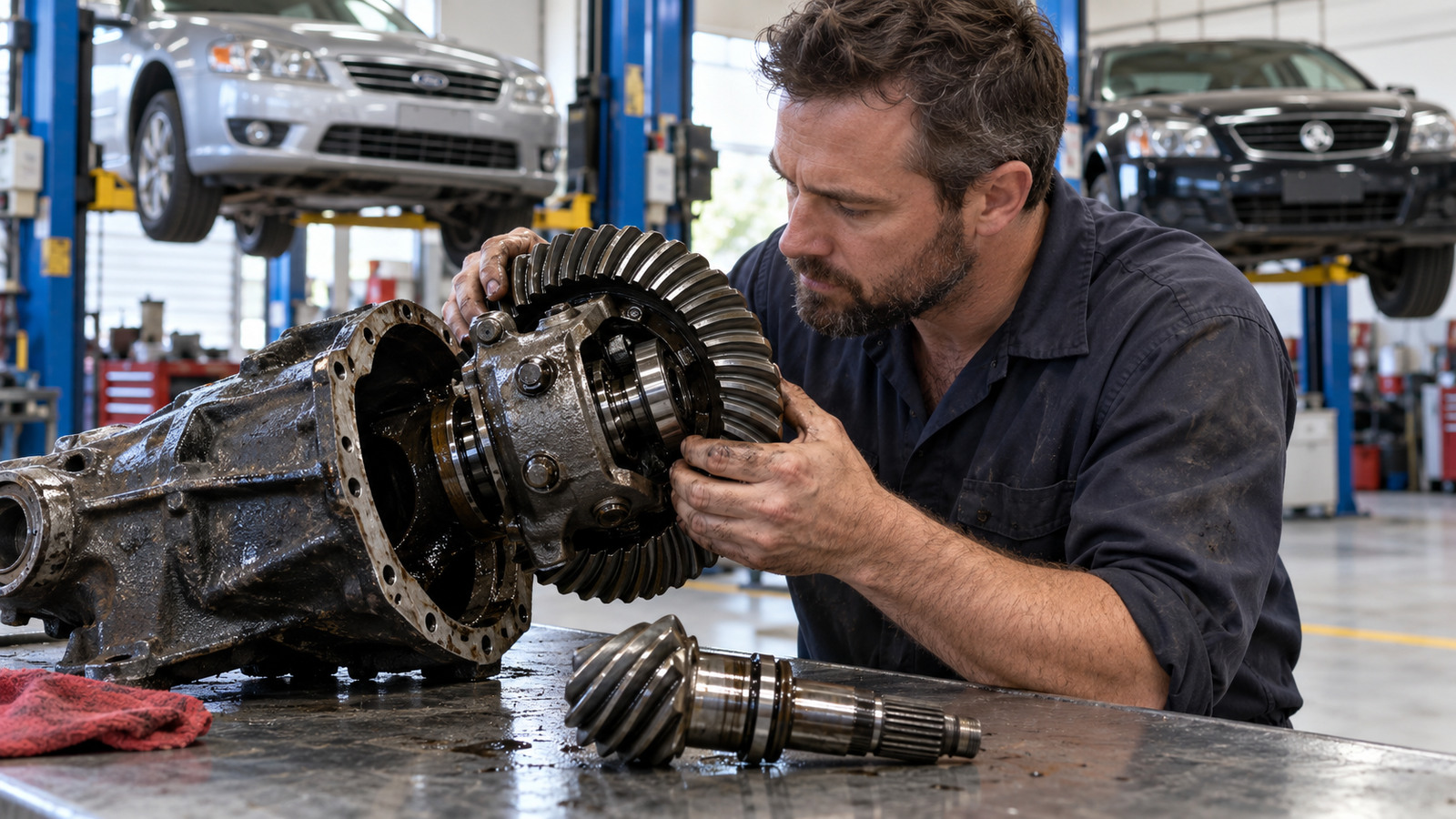
The M number names the differential centre, not the car, so the badge on the boot does not settle it. Falcons and Commodores of the same years carry different centres, and a diff can be swapped later in a car’s life. Read the code off the differential that is in the car now, take the ratio with it, and the gear set is a straightforward order.
Gear set orders go wrong at that first step. Somebody orders an M78 diff gear set because a mate’s Commodore had one. The centre under their own car turns out to be something else. The parts go back, the car sits on the hoist, and the job waits.
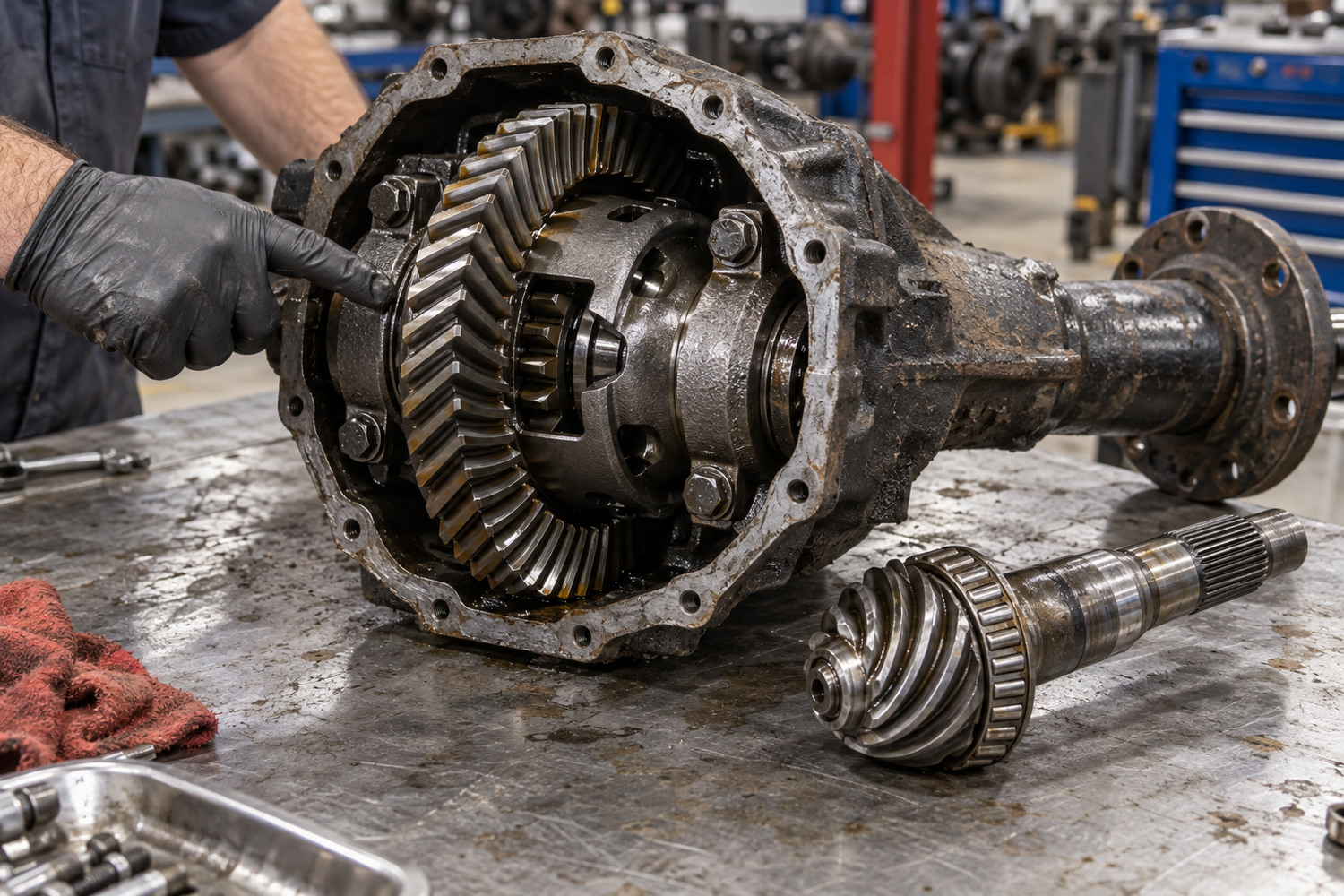
These are codes for the differential centre. The centre is the gear assembly that takes drive from the tailshaft and splits it between the two rear wheels. The crown wheel and pinion inside it are the parts a gear set replaces.
Australian suppliers list gear sets against that code rather than against the car. Most of the gear sets listed for these cars fall under M78, M80 and M86. The M75, M76 and VE VF Commodore sets sit around them and are ordered the same way.
So the code is the buying unit. A model name gets you close. Close is what sends parts back.
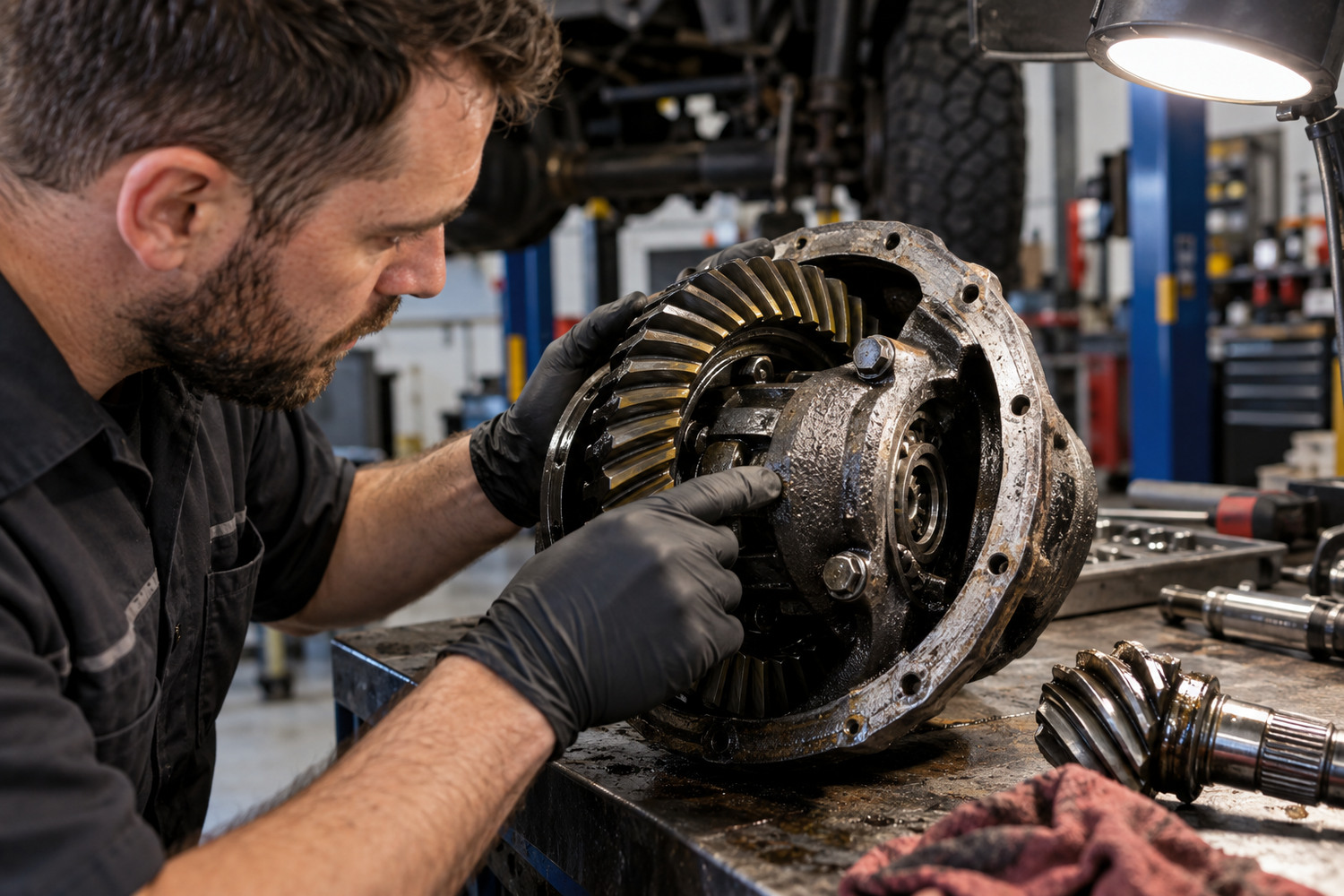
Three things settle it. All three mean looking at the differential rather than at the car.
A centre still under the car is harder to read than one on a bench. So the part number off the old set is the cleanest route once the job is apart. Do the check before the parts are ordered, not after.
The model name settles nothing, and two current Australian listings show why. RTS lists Ford BA and BF Falcons under one gear ring and pinion set covering the M75, M76 and M78. The gear set listings on this site put FG, BA and BF Falcons under both M80 and M86 sets. Neither supplier is wrong. The same model name covers cars that were built with different centres.
The ratio on its own does not settle it either. The same ratio turns up under more than one code. A 3.45 is listed for an M78 diff and for an M80 diff. A 3.73 is listed for an M80 diff and for an M86 diff. Knowing the car runs a 3.73 narrows nothing on its own.
So a model-to-code chart cannot be relied on, because one model name can sit above more than one code. If you cannot read a marking, the diff gets identified off the vehicle before anything is ordered.
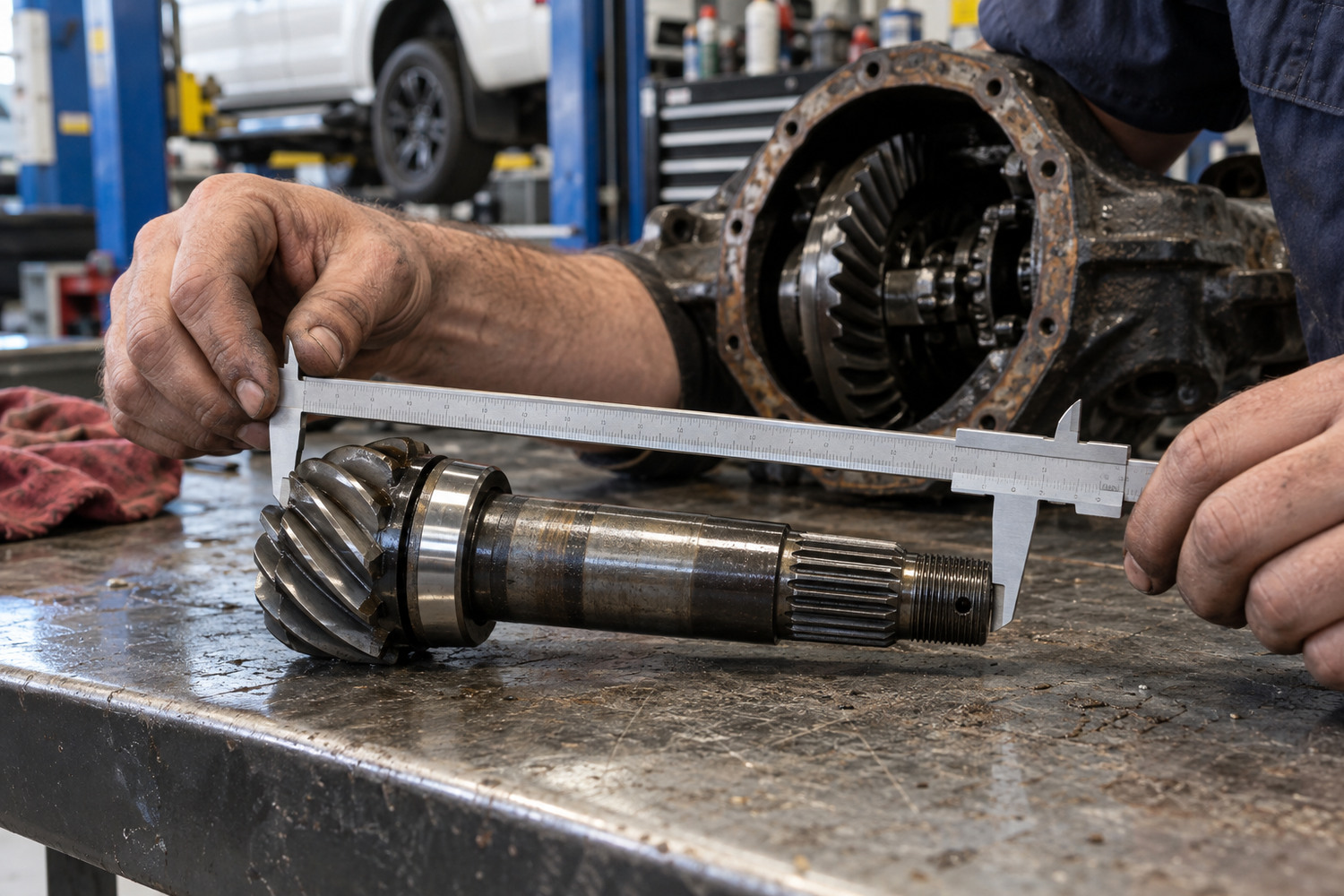
Body style matters as much as the code does. RTS states on its M75, M76 and M78 gear ring and pinion listing: “please confirm pinion length before purchase as this is to suit sedans only. Ute M78 diff’s have a slightly longer pinion.”
That one line is the most useful warning on the subject. A set bought for a sedan can be the wrong part for a ute wearing the same badge and the same code. So the question is not only which code the car has. It is which body the code is sitting in.
Confirm the pinion length before the order goes in. Doing it after the box arrives costs a return and the time that goes with it.
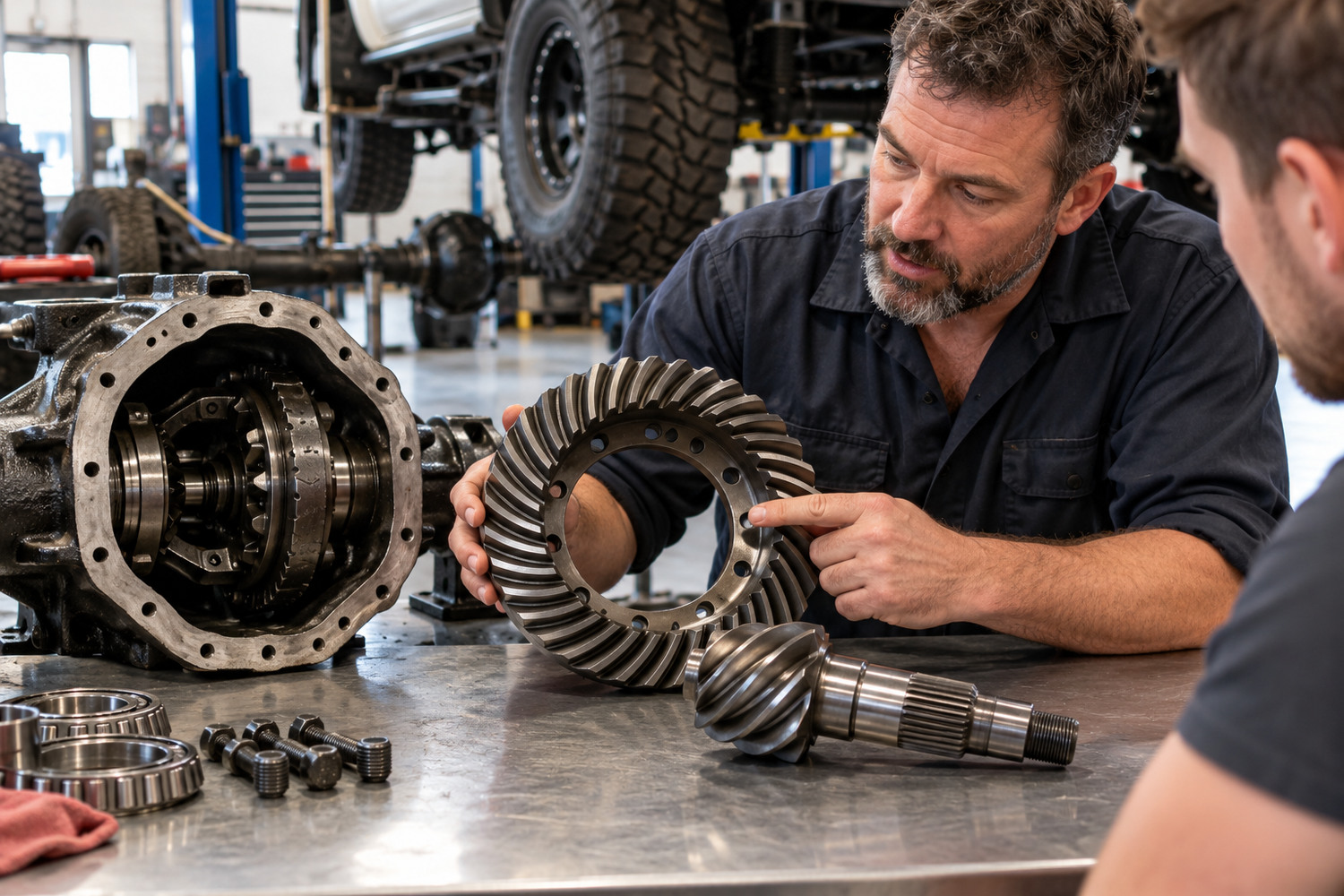
The ratio is the second half of the order. A numerically higher ratio turns the pinion more times for each turn of the wheels. The engine then sits at higher revs at the same road speed. A lower number does the opposite.
What is listed differs by code:
Which of those suits a car is a conversation about the gearbox, the tyre size and the work it does. It is also the point at which the code has to be settled. Several of these ratios exist under more than one code, so a ratio on its own is not an order. The store’s gear set listings carry the fitment detail for each one, ratio by ratio.
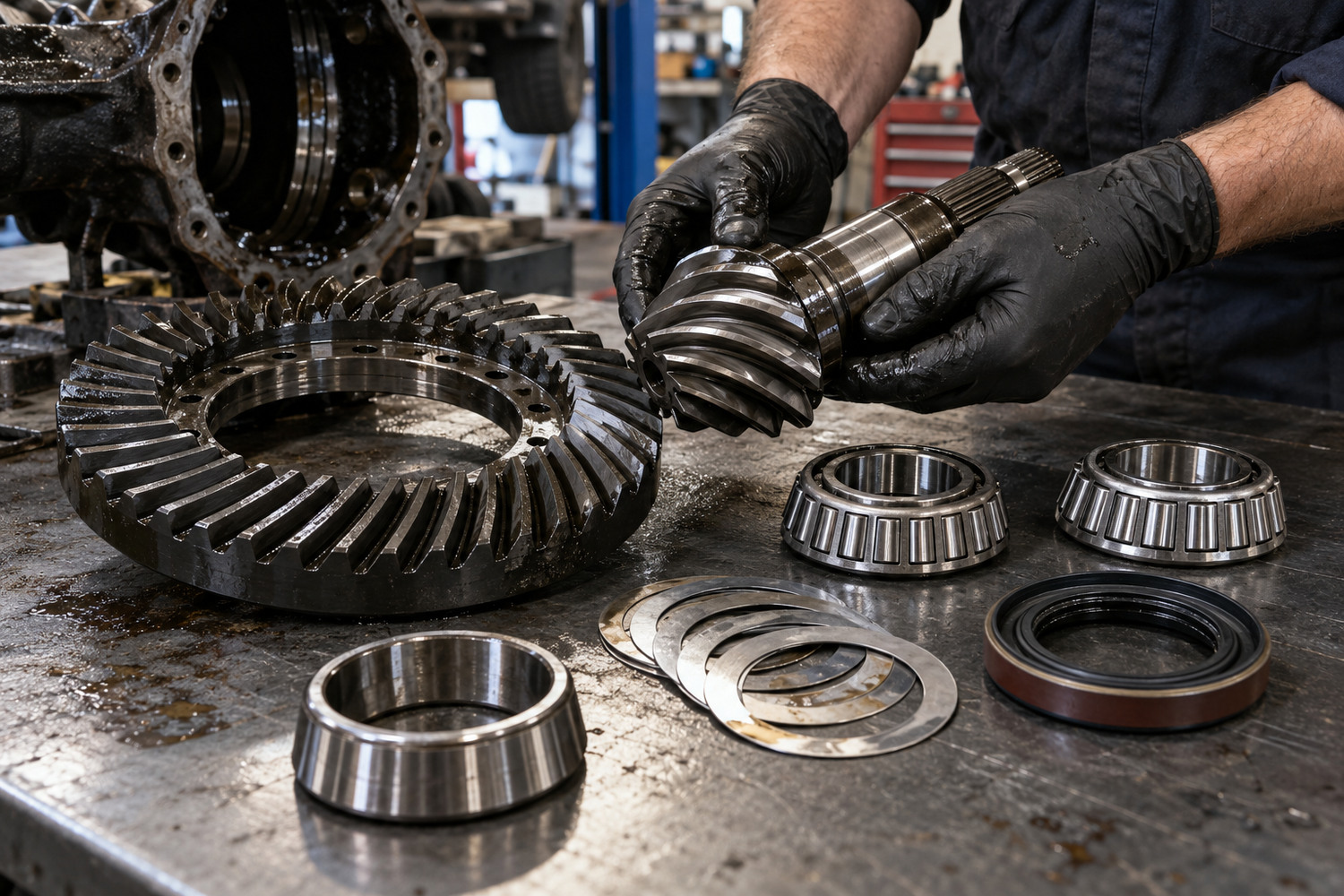
A gear ring and pinion set is the gears. Bearings, seals and shims are not in the box. That is why catalogues list a gear and bearing kit as a separate product from a gear ring and pinion. RTS sells both, side by side, under those two names.
Fitting a set means the centre comes apart and goes back together with the bearings and shims set by hand. That work is a rebuild. The post on getting a 4×4 differential rebuilt before a summer trip covers what one involves. So a gear set is one line on the job rather than the whole of it. Allow for the labour and the small parts as well as the gears.
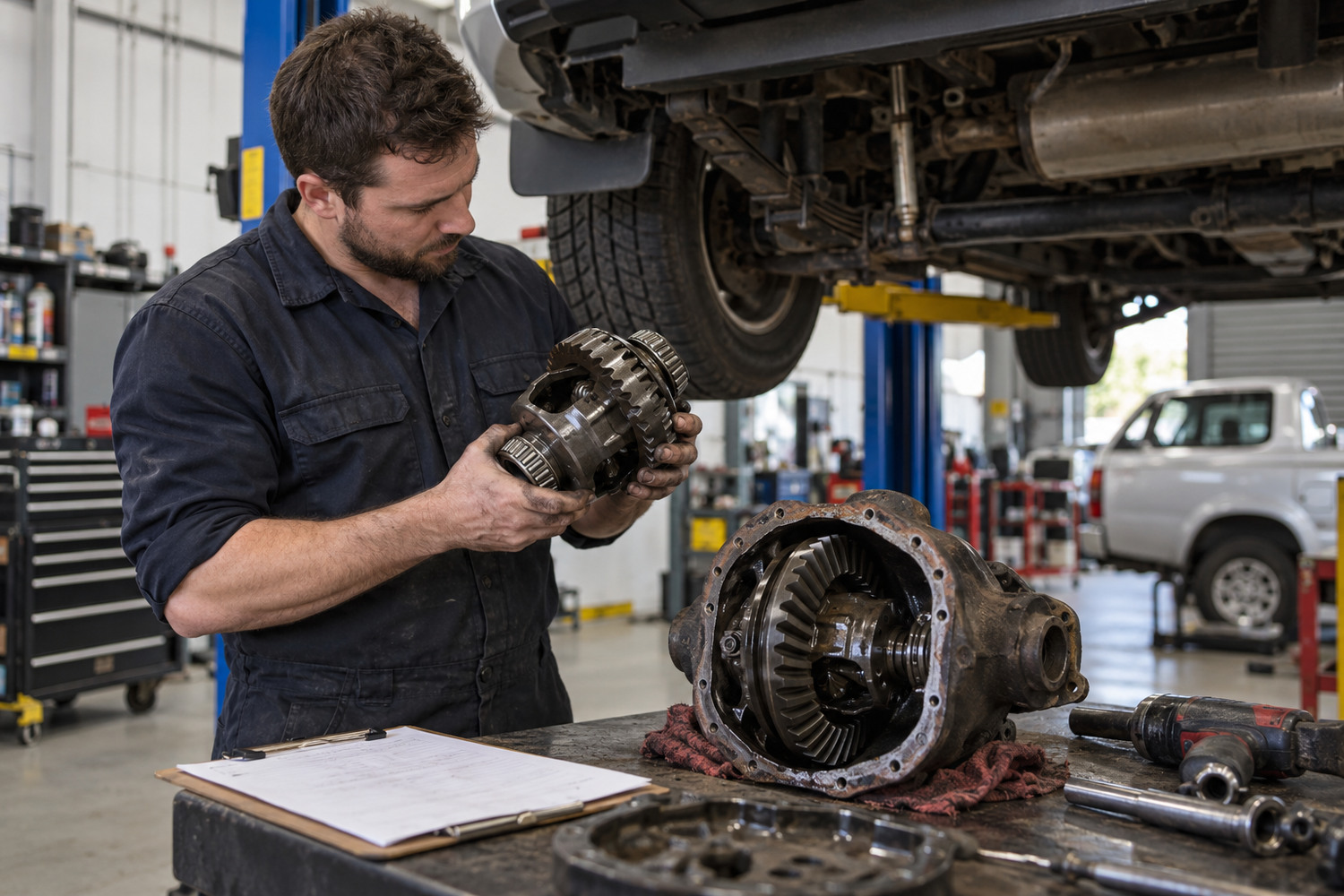
Four things: the code, the ratio, the model, and whether the car is a sedan or a ute.
The order form on this site asks for the vehicle make, model, engine and gearbox. The differential is a required field on it. So the code has to be in hand before the form can be filled in. That is the reason to read it off the car first.
If the diff is already apart, keep the part number off the old gear set. It is the most useful thing you can send. A part number points at one listing rather than a shortlist.
Around Keysborough and Melbourne’s south-east these cars are still daily drivers and weekend projects. The diff under one of them is not always the one it left the factory with. Swaps happen, and a car that has had a centre changed will not match anything written about the model.
Get the code and the ratio off the car, then send them through the enquiry form. GJ Drivelines can then match a set to the differential you have rather than to the badge on the boot.
They are two different differential centres, not two versions of the same one. Each has its own gear sets, listed and ordered against the code rather than the model. The choice between them is settled by which centre is bolted under the car, not by preference.
The badge cannot answer that one. Australian suppliers list BA Falcons under more than one differential code, so the car has to be checked rather than looked up. Whoever has the vehicle in front of them reads the code off the centre.
Yes. They are sold together at a single ratio, and that pairing is what a gear set is. The bearings, seals and shims a fitting job needs are bought separately.
Within the ratios listed for that code, yes. A ratio change means new gears and a rebuild rather than a bolt-on part, so the centre comes apart either way. The code under the car stays the same.


Chrysler – Dodge
727 – 30 Spline 1 11/16″ Seal Diameter
904 – 26 Spline 1 9/16″ Seal Diameter
Ford
C6-T56 – 31 Spline 1 11/16″ Seal Diameter
AOD & C4 & T5 – 28 Spline 1 1/2″ Seal Diameter
4 R 7OW – 28 Spline 1.598″ Seal Diameter
General Motors
T-350 700R4-4LLOE – 27 Spline 1 1/2″ Seal Diameter
T-400-4L80E – 32 Spline 1 7/8″ Seal Diameter
Note: Transmission slip yokes are manufactured with various U-Joint Series. It is important to match Horsepower and Torque requirements to U-Joint Series. For aftermarket transmission applications usually a spline count and seal diameter will identify slip yoke required.

If Pinion Yoke has Placement tabs that retain the U-Joint, measure inside tabs. See Diagram D.

If Pinion Yoke does not have Placement Tabs that retain U-Joint, measure from flat of yoke inside to inside. See Diagram E.

If 4 bolt Flange is used on pinion, measure Pilot Diameter and center to center diagonally bolt hole to bolt hole. See Diagram L.

Universal Joint Size. There are hundreds of U-Joint sizes or “Series” to accomodate many different applications of power and desired longevity for your automotive, 4×4 truck or auto racing requirements, these 4 series of joints cover most needs.
1310 Spicer Series: 1 1/16″ Cup Diameter (Dim C – Diagram A) 3 7/32″ length (Dim B – Diagram A) Certain Ford applications have 2 cups 1 1/8 Diameter. Appropriate horse power range is up to 500 in circle track or road racing, small tire drag racing and 4×4. Also available: Performance Dynamic Cryo Joint.
1330 Spicer Series: 1 1/16″ Cup Diameter (Dim C – Diagram A) 3 5/8″ length (Dim B – Diagram A) Certain Ford applications have 2 cups 1 1/8 Diameter. Slightly stronger than 1310, Used in 5.0 Mustangs. Also available: Performance Dynamic Cryo Joint.
3R Saginaw Series: 1 1/8″ Cup Diameter (Dim C – Diagram A) Retained with internal clip 2 5/8″ (Dim B – Diagram A). Most common GM joint. Horse power range up to 700 in road racing and circle track. Solid drag racing U-Joint can accomodate most sportsman classes. Also available: Performance Dynamic Cryo Joint.
1350 Spicer Series: Manufactured with OEM tolerances and treated with our Cryogenic Process to yeild the strongest U-Joint available. For drag racing applications a solid non-lube design U-Joint is recommended because of the tremendous initial shock load, or short duration of high torque the joint must be able to withstand.

If PST is supplying you with transmission slip yoke, Pinion yoke and driveshaft yoke measure Dim W. See Diagram N.
If PST is supplying you with transmission slip yoke and driveshaft measure Dim X. See Diagram N.
2 Piece driveshafts use Dim Y + Z. See Diagram N.