No products in the cart.

All Categories
All Categories
external
variable
grouped
simple
[fibosearch]
On a straight road, a 3.73 diff ratio turns the tailshaft 3.73 times for every turn of the wheels. Against a 3.23, that puts the engine about 15.5 per cent higher in revs at any road speed in the same gear, and against a 3.45 about 8.1 per cent higher. The wheels get the same proportion of extra torque, so the car launches and pulls harder, but it cruises at busier revs and runs out of each gear sooner.
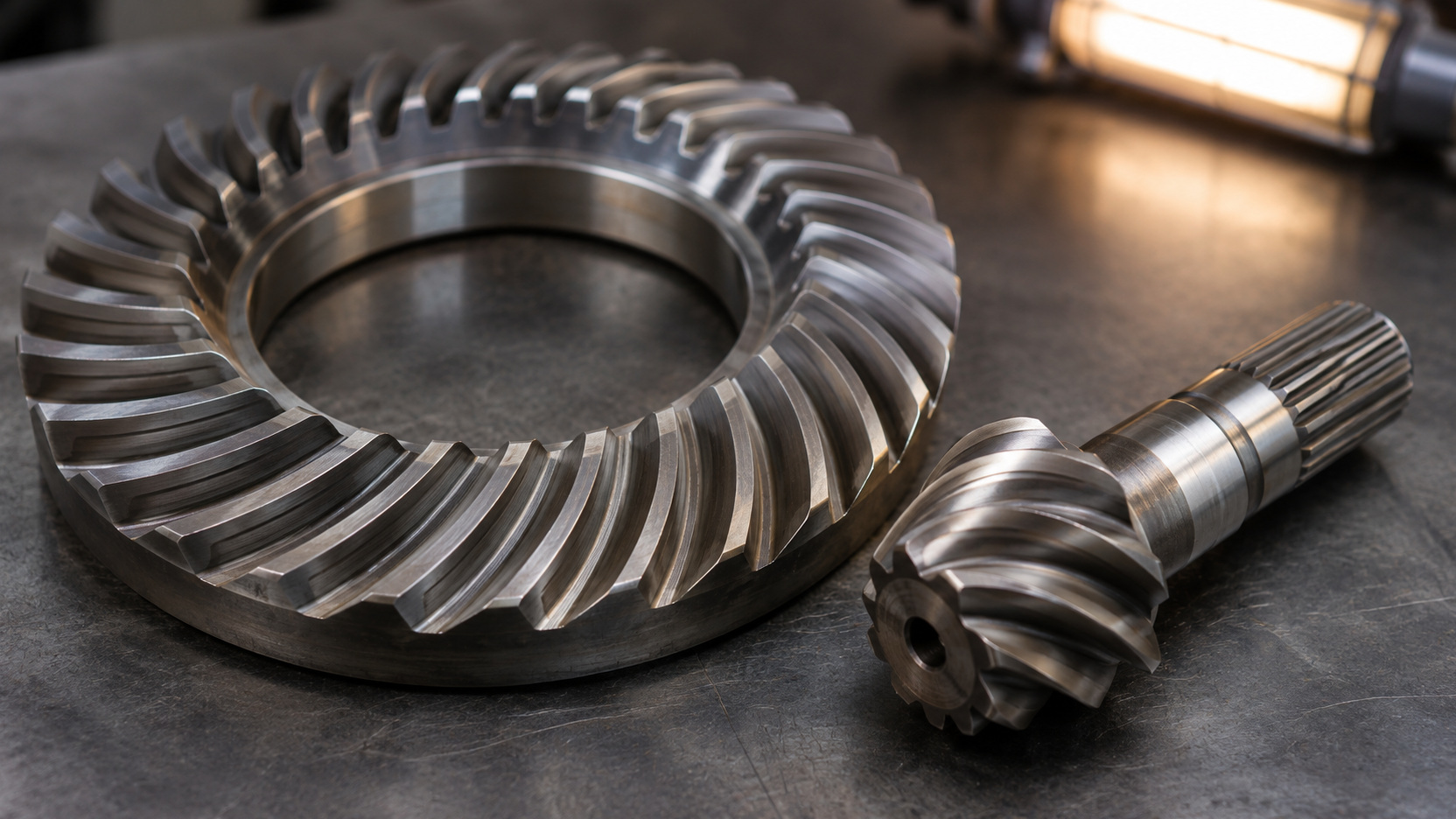
A diff ratio, also called the final drive or axle ratio, is the gearing inside the differential (diff) between the crown wheel and the pinion. That pair is also called the ring and pinion. Spicer’s gear ratio calculator gives the diff ratio as the ratio between the ring gear and the pinion gear in the differential housing, expressed ‘to 1’.
So a 3.73:1 set turns the pinion, and the tailshaft bolted to it, 3.73 times for each turn of the crown wheel. In a corner the two rear wheels turn at different speeds. On a straight road the crown wheel turns once for each wheel turn.
To put numbers on it, take three assumptions: a tyre that rolls 2.0 m for each turn, a top gear of 1.00:1, and 100 km/h on a straight road. For a 3.73, the sum runs like this:
The same steps give these figures for four ratios, rounded to the nearest rpm:
| Ratio | Tailshaft rpm at 100 km/h (also engine rpm in a 1.00:1 top gear) | Road speed per 1,000 engine rpm in that gear |
|---|---|---|
| 3.23 | 2,692 | 37.2 km/h |
| 3.45 | 2,875 | 34.8 km/h |
| 3.73 | 3,108 | 32.2 km/h |
| 3.91 | 3,258 | 30.7 km/h |
At the same 100 km/h, the 3.73 turns the engine 416 rpm faster than a 3.23, about 15.5 per cent. It turns 233 rpm faster than a 3.45, about 8.1 per cent. The right-hand column shows the same trade from the other side: each 1,000 rpm carries the car 37.2 km/h on a 3.23 but only 32.2 km/h on a 3.73.
A gear set trades speed for torque, the twisting force on a shaft. Power going into a gear pair equals power coming out, less what friction takes. So a pair that turns its output 3.73 times slower than its input multiplies torque by 3.73, less those friction losses.
With the same engine torque, at the same engine revs and in the same gear, a 3.73 sends about 15.5 per cent more torque to the wheels than a 3.23. You feel that extra twist as a harder launch and a stronger pull when you put your foot down.
The same arithmetic shows the downside:
The figures show the trade. They do not show whether it suits a particular car, or whether the car is quicker overall. That depends on the rest of the driveline and on how the car is used.
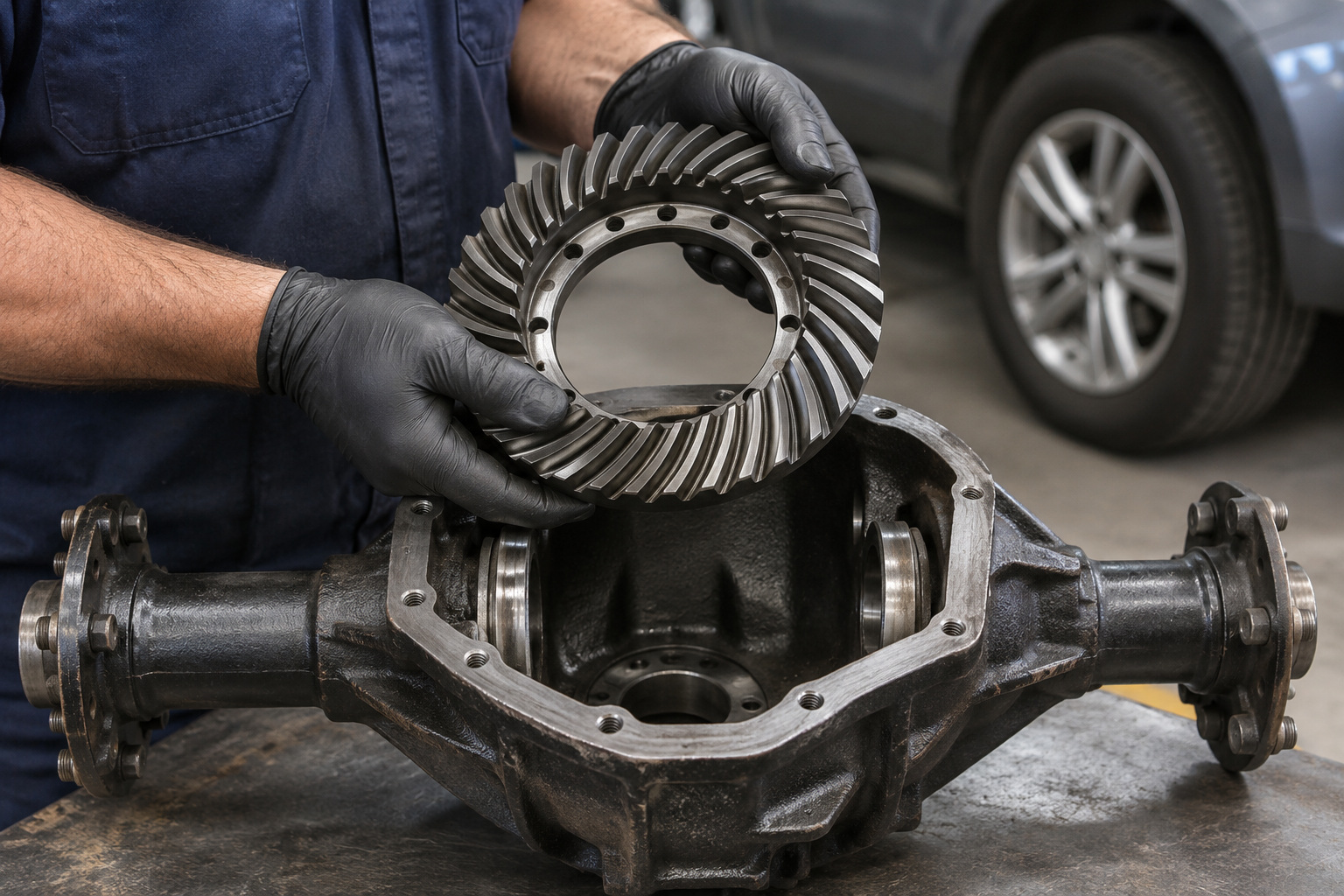
Swapping the crown wheel and pinion changes one number in the driveline. It does not change:
Several ratios are listed under more than one code, so choosing a ratio and identifying the centre are separate jobs. If you have not yet confirmed which centre is under the car, start with whether you have an M78, M80 or M86 diff.
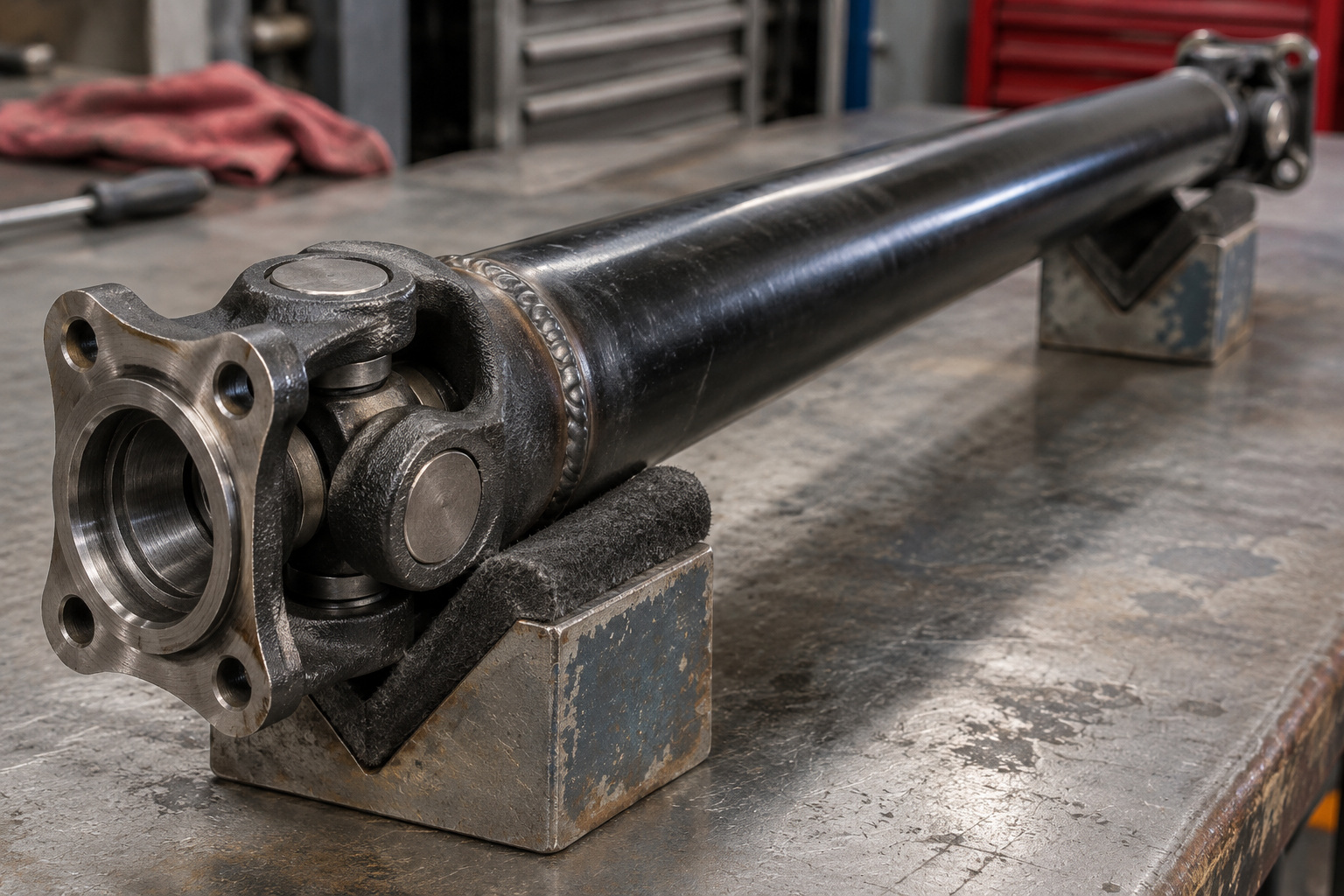
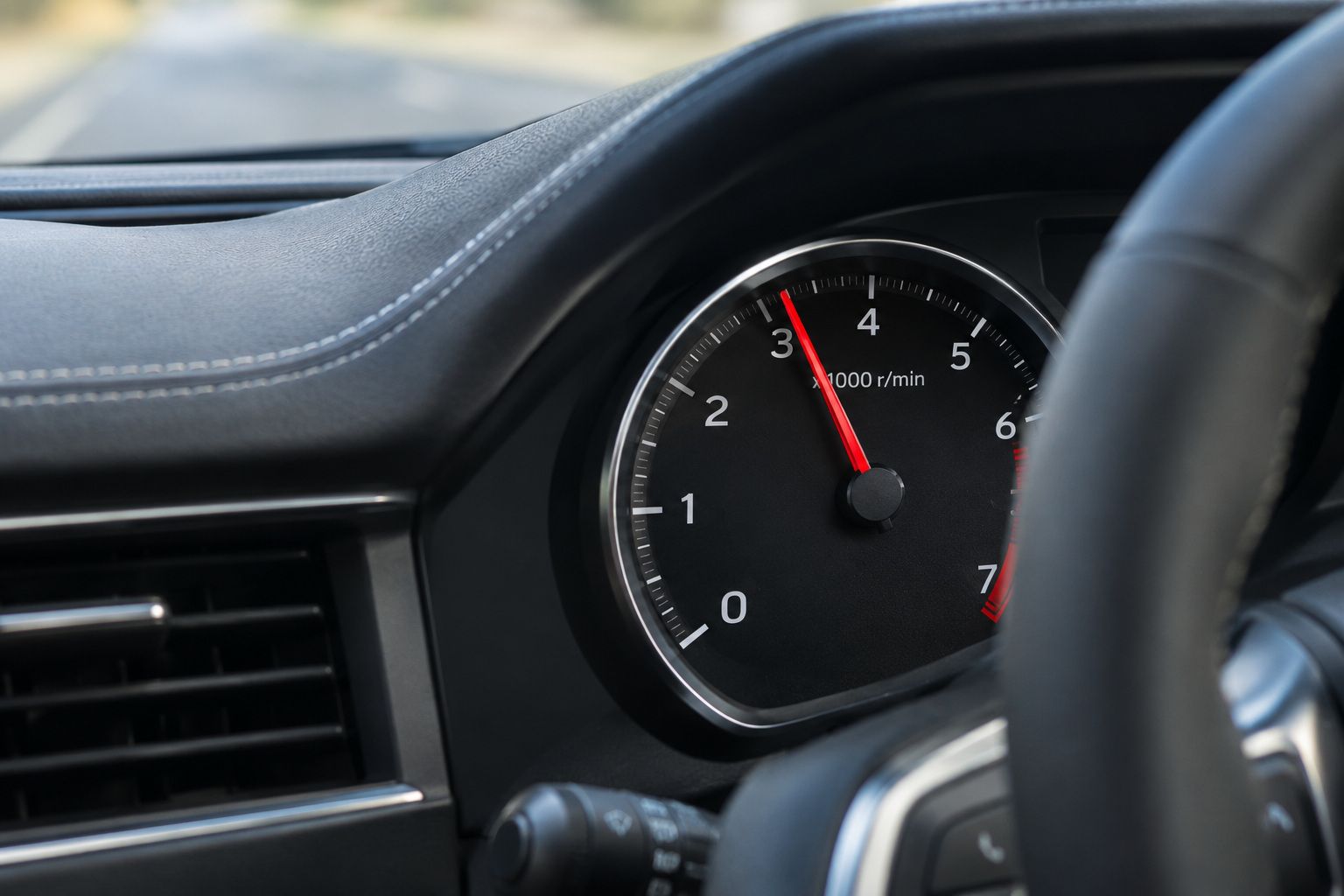
Tailshaft speed is wheel speed multiplied by the diff ratio, whatever gear the gearbox is in. At the same road speed, a 3.73 spins the tailshaft about 15.5 per cent faster than a 3.23. On the 2.0 m tyre at 100 km/h, that is 3,108 rpm against 2,692 rpm.
The gearbox does not change the tailshaft figure. It changes the engine figure. In a 1.00:1 top gear the engine and tailshaft turn together. In an overdrive top gear, which is a ratio below 1.00:1, the tailshaft turns faster than the engine.
The tailshaft forms on our quote page ask about the same parts of the driveline. Diff is a required field beside RPM and Gearbox. A second form asks for Tyre Size, Differential and Tailshaft Top RPM. If you have changed the ratio, or plan to, give the new ratio when a shaft is ordered or rebuilt.

The diff ratio is one of three numbers that set engine revs. The overall ratio is the gearbox gear multiplied by the diff ratio. The tyre’s rolling circumference, the distance it travels in one turn, sets how far each wheel turn carries the car. A taller tyre lowers revs at a given speed, and a shorter one raises them.
The whole sum fits on one line:
engine rpm = road speed in metres a minute ÷ rolling circumference in metres × gearbox ratio × diff ratio
Rerun the example with your own top gear ratio and your own tyre’s rolling circumference, taken from the vehicle or tyre maker’s documentation rather than guessed from the sidewall.
Before choosing, we’d work out two figures for each ratio you are weighing up. The first is the revs at your usual cruising speed in your own top gear. The second is the road speed at which each gear reaches the engine’s rev limit. Those two numbers show the trade more clearly than the ratio printed on the box.
The arithmetic does not settle fitment. Whether a set suits a particular vehicle comes down to identifying the centre in it, not the ratio. Once the centre is confirmed, the GJ Drivelines online store lists differential parts alongside tailshafts and joints, and we can talk through a ratio for your own gearbox and tyre combination.


Chrysler – Dodge
727 – 30 Spline 1 11/16″ Seal Diameter
904 – 26 Spline 1 9/16″ Seal Diameter
Ford
C6-T56 – 31 Spline 1 11/16″ Seal Diameter
AOD & C4 & T5 – 28 Spline 1 1/2″ Seal Diameter
4 R 7OW – 28 Spline 1.598″ Seal Diameter
General Motors
T-350 700R4-4LLOE – 27 Spline 1 1/2″ Seal Diameter
T-400-4L80E – 32 Spline 1 7/8″ Seal Diameter
Note: Transmission slip yokes are manufactured with various U-Joint Series. It is important to match Horsepower and Torque requirements to U-Joint Series. For aftermarket transmission applications usually a spline count and seal diameter will identify slip yoke required.

If Pinion Yoke has Placement tabs that retain the U-Joint, measure inside tabs. See Diagram D.

If Pinion Yoke does not have Placement Tabs that retain U-Joint, measure from flat of yoke inside to inside. See Diagram E.

If 4 bolt Flange is used on pinion, measure Pilot Diameter and center to center diagonally bolt hole to bolt hole. See Diagram L.

Universal Joint Size. There are hundreds of U-Joint sizes or “Series” to accomodate many different applications of power and desired longevity for your automotive, 4×4 truck or auto racing requirements, these 4 series of joints cover most needs.
1310 Spicer Series: 1 1/16″ Cup Diameter (Dim C – Diagram A) 3 7/32″ length (Dim B – Diagram A) Certain Ford applications have 2 cups 1 1/8 Diameter. Appropriate horse power range is up to 500 in circle track or road racing, small tire drag racing and 4×4. Also available: Performance Dynamic Cryo Joint.
1330 Spicer Series: 1 1/16″ Cup Diameter (Dim C – Diagram A) 3 5/8″ length (Dim B – Diagram A) Certain Ford applications have 2 cups 1 1/8 Diameter. Slightly stronger than 1310, Used in 5.0 Mustangs. Also available: Performance Dynamic Cryo Joint.
3R Saginaw Series: 1 1/8″ Cup Diameter (Dim C – Diagram A) Retained with internal clip 2 5/8″ (Dim B – Diagram A). Most common GM joint. Horse power range up to 700 in road racing and circle track. Solid drag racing U-Joint can accomodate most sportsman classes. Also available: Performance Dynamic Cryo Joint.
1350 Spicer Series: Manufactured with OEM tolerances and treated with our Cryogenic Process to yeild the strongest U-Joint available. For drag racing applications a solid non-lube design U-Joint is recommended because of the tremendous initial shock load, or short duration of high torque the joint must be able to withstand.

If PST is supplying you with transmission slip yoke, Pinion yoke and driveshaft yoke measure Dim W. See Diagram N.
If PST is supplying you with transmission slip yoke and driveshaft measure Dim X. See Diagram N.
2 Piece driveshafts use Dim Y + Z. See Diagram N.